
In an industry built on imagination, illusion and storytelling, the pace of change has rarely felt as relentless as it does today.
Matthew Pullicino, CEO of Stargate Studios Malta, is acutely aware that the tools reshaping the film and TV sector are also redefining its very foundations.
Artificial intelligence is now embedded in daily workflows, influencing everything from pricing structures to creative processes.
“You can hear it,” he remarks during our interview on site at Stargate Studios Malta in Mosta, referring to the hum of machinery that permeates the interview. “This noise you’re hearing at the moment are our AI servers. We live in a commercial world. Our artists are paid to make art. But it’s not art in the purest sense – it’s commercial art.”
That distinction – between art and commerce – runs like a thread through his musings.
While the creative industries have long celebrated artistic integrity, Pullicino is pragmatic about the realities of operating within a market-driven ecosystem.
“Commercial means that clients will always go for the most economic option,” he explains.
This tension is not new, but AI has accelerated it dramatically. As technology enables faster, cheaper, and increasingly sophisticated outputs, studios are being forced to recalibrate their value propositions.
“When suddenly others are doing it faster, cheaper, objectively better, then you have to say – this is where our art meets reality,” he says. “You can always be an art house filmmaker, but the industry we have today is built on economics. People binge-watch series that cost millions.”
For Pullicino, the comparison extends beyond film. He draws parallels with manufacturing, where automation has long reshaped production lines.
The reskilling necessity
Perhaps the most immediate impact of AI is on people.
Entire career pathways, once clearly defined, are now in flux. The traditional ladder from junior artist to senior, to supervisor no longer offers the same certainty.
The response, he insists, is not optional. “You have to reskill,” Pullicino says
With long-serving employees and established career pathways now being disrupted by rapid industry change, maintaining stability has become an increasingly complex balancing act.
“I have people who have been here for 14 years. One day you’re standing at the top of that ladder and the whole thing collapses. The next person knows more than you, and they’re a kid,” Pullicino reflects. “I’m trying to figure out how to keep charging what we charge, and keep paying my team the salaries we’ve built up over the years.
Yet amid the uncertainty, Pullicino believes Malta’s greatest strength lies in its mindset – one shaped by adaptability, creativity and resourcefulness.
It is, he suggests, one of the key reasons why Stargate Studios has continued to thrive.
“We have a studio here in Malta because, at the end of the day, the ‘secret sauce’ is the local mindset,” he says. “It’s the perspective people here bring to the table.”
That ability to think differently and solve problems creatively has become a defining feature of the studio’s identity.
“Every time we work on a show, someone comes up with an idea and people say, ‘Ah, yes, I didn’t think of that,’” Pullicino explains. “We can spin things differently. We’re very resourceful – we have to be.”
As for their clients, increasingly more of them are expecting studios to integrate AI into their workflows as a baseline requirement.
“We do get calls asking, ‘Isn’t there a smarter, faster, cheaper way to do this?’” he says.
This pressure reverberates across the production chain. Roles traditionally tied to physical production, such as makeup artists, set designers, wardrobe teams and so on, are beginning to feel the strain.
“When suddenly others are doing it faster, cheaper, objectively better, then you have to say – this is where our art meets reality”
Matthew Pullicino, CEO of Stargate Studios Malta
“There are going to be movies made without them,” Pullicino says plainly. “And there will also be movies made with them. It depends on the budget.”
He likens the shift to the transition from film to digital: “Why would you still shoot on film? Because it’s an art form. But it’s more expensive, so the sales have to justify it.”
A new kind of storytelling
Beyond production efficiencies, AI is also reshaping the very nature of storytelling.
Pullicino points to a future where content is not just consumed but generated on demand.
“There will be movies that don’t need anything – not even a camera, not even actors,” he says. “Movies will be made by the user who is watching… content tailored in real time. I wouldn’t be surprised if platforms such as Spotify start creating music based on what you listen to. We’re nearly there already.”
Yet, despite the technological leap, he remains cautious about what might be lost in the process.
“The biggest danger is not that things are made differently,” he says. “It’s that, because of the frenzy, we lose our roots. I think the biggest ‘attack’ is actually on culture, on identity.”
Malta’s moment on the global stage
Amid these global shifts, Stargate Studios Malta has been building an international reputation.
Recent BAFTA and Emmy nominations for its for work on the ‘USS Callister: Into Infinity’ episode of Netflix’s Black Mirror, created by Charlie Brooker, mark a significant milestone.
“It’s a privilege to be nominated,” Pullicino says. “You’re sharing a seat with major productions. It puts you out there.”
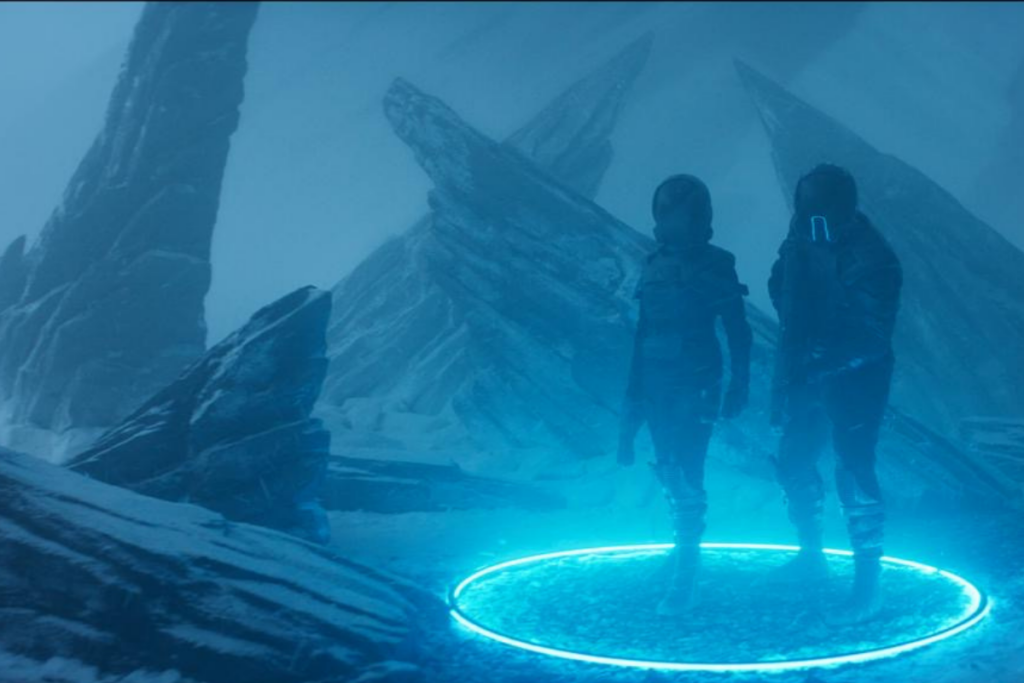
The studio’s journey with Black Mirror reflects a broader trajectory. What began as a small contribution evolved into sustained collaboration across multiple episodes and seasons.
“They start you off with something small,” he explains. “Then you prove yourself, and it grows. There is some repeat business, which is actually very rare.”
Such recognition, he believes, strengthens Malta’s position as a viable hub for high-end production, supported by competitive tax incentives and a growing talent pool.
“Malta is positioned very well,” he says. “When we pitch, we combine our work, our numbers, and the cash rebate offered by the government. Put together, it becomes a viable option.”
Yet, he is quick to temper expectations. Competing on the global stage means going up against industry giants.
For the Bafta 2026 TV and TV Craft Awards, Stargate Studios was nominated in the Special, Visual and Graphic Effects category.
Visual Effects Supervisor Jonathan Caruana represented the Stargate Studios Malta team at the awards in London.
Amongst others, they were up against Disney’s Andor, part of the Star Wars universe, which eventually ended up winning the category.
“When you look at the competition, you realise the scale of it all,” he notes. “But even just being in the room with them – that’s a win.”
One project Pullicino hopes will gain significant traction next year is the recent feature film adaptation of The Magic Faraway Tree by Enid Blyton.
He speaks enthusiastically about the production, which Stargate Studios Malta worked on last year, noting the overwhelmingly positive early reactions the film has already received.
The studio’s artists collaborated closely with the lead creative team in the UK to bring Blyton’s fantastical universe to life, crafting the magical worlds, whimsical characters and imaginative vehicles that define the beloved story.
Parts of the production were also filmed in Malta, further strengthening the island’s connection to the project.
For Pullicino, the film represents the kind of ambitious, creatively rich production capable of resonating on an international level.
“It has the makings of something that could get picked up for the BAFTAs next year,” he says.
The strength of being small
Stargate Studios Malta is leaning into its size rather than competing on scale.
“Being ‘small’ is a real strength,” Pullicino asserts. “It allows us to pivot.”
With a team of around 50 people, the studio occupies a niche space – large enough to deliver complex projects, yet agile enough to adapt.
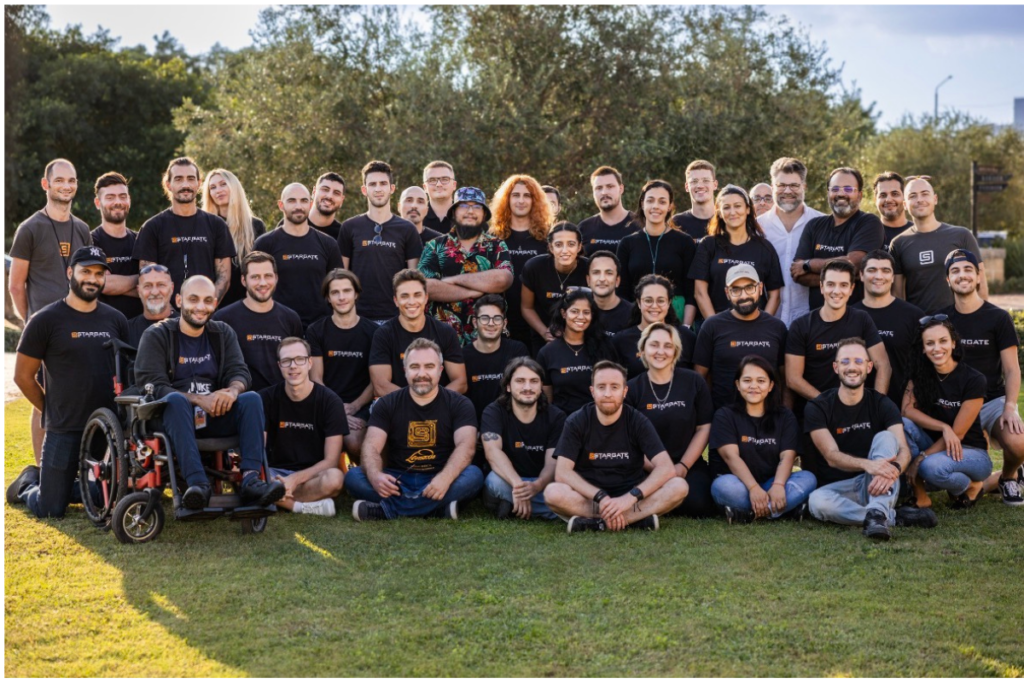
“We’ve used the word ‘boutique’ a lot,” he says. “Big studios come and go. But boutiques – if they’re built right – can survive.”
This adaptability is particularly valuable in navigating technological disruption. While new AI-driven studios are emerging, many lack the experience that established players bring.
“They have the new tools, but they don’t have the legacy,” Pullicino explains. “If those tools fail, we can fall back on our pipeline. That’s part of our strategy.”
Creating from within
One of Stargate Studios Malta’s biggest ambitions is to move beyond service provision.
“Hopefully, we are starting to create our own content,” Pullicino reveals.
Historically, such ventures have been difficult to justify, particularly given the costs and resource commitments involved.
However, emerging technologies may shift that equation, lowering barriers to entry and enabling new forms of storytelling which were previously out of reach for smaller studios.
“On our end, if we manage to make what we’re doing right now work, to diversify and actually become producers, it’s because the technology is allowing us to do that,” he says.
The human element
Despite his clear-eyed view of disruption, Pullicino remains fundamentally optimistic about human creativity.
“I don’t think creativity will ever be completely stifled,” he says. “Jobs will change. People will adapt.”
“We’re never going to be the biggest. We’re an island. But we can be ourselves. And that’s what will make the difference.”
Matthew Pullicino, CEO of Stargate Studios Malta
He envisions a future where individuals are empowered to create in new ways – designing, producing and personalising their own content… and not only on the big and small screen.
“Imagine designing your own shoes at night, 3D printing them, and wearing them the next day,” he suggests. “That’s where we’re heading.”
Yet, even in this hyper-personalised world, he believes the essence of creativity will endure, rooted in culture, experience and identity.
“What we have to keep doing is making things, using whatever technology we have,” he says. “But we must retain our identity. That’s what makes us different.”
For Malta, this identity, shaped by resourcefulness and a distinctive local mindset, could prove to be its greatest asset.
“We’re never going to be the biggest,” Pullicino concludes. “We’re an island. But we can be ourselves. And that’s what will make the difference.”