




On May 8, the newly established Malta Dental Specialists Association (MDSA) hosted a well-attended lecture on the increasingly important relationship between orthodontics and implant dentistry.
The event was organised by Audrey Pace, consultant orthodontist on behalf of MDSA, and brought together dental specialists, practitioners and trainees from across Malta and Gozo for an evening dedicated to interdisciplinary treatment planning and modern restorative techniques.
The lecture was delivered by John Scholey, consultant orthodontist and clinical lead at the Royal Stoke University Hospital UK, who explored how orthodontic treatment and implant placement can be coordinated to improve outcomes in complex dental cases.
Through a series of clinical case presentations, attendees were shown how orthodontic alignment can support successful implant placement in patients with missing teeth, malocclusions and full-mouth rehabilitation needs. The lecture highlighted the importance of careful treatment sequencing, digital planning technologies and collaboration between different dental disciplines.
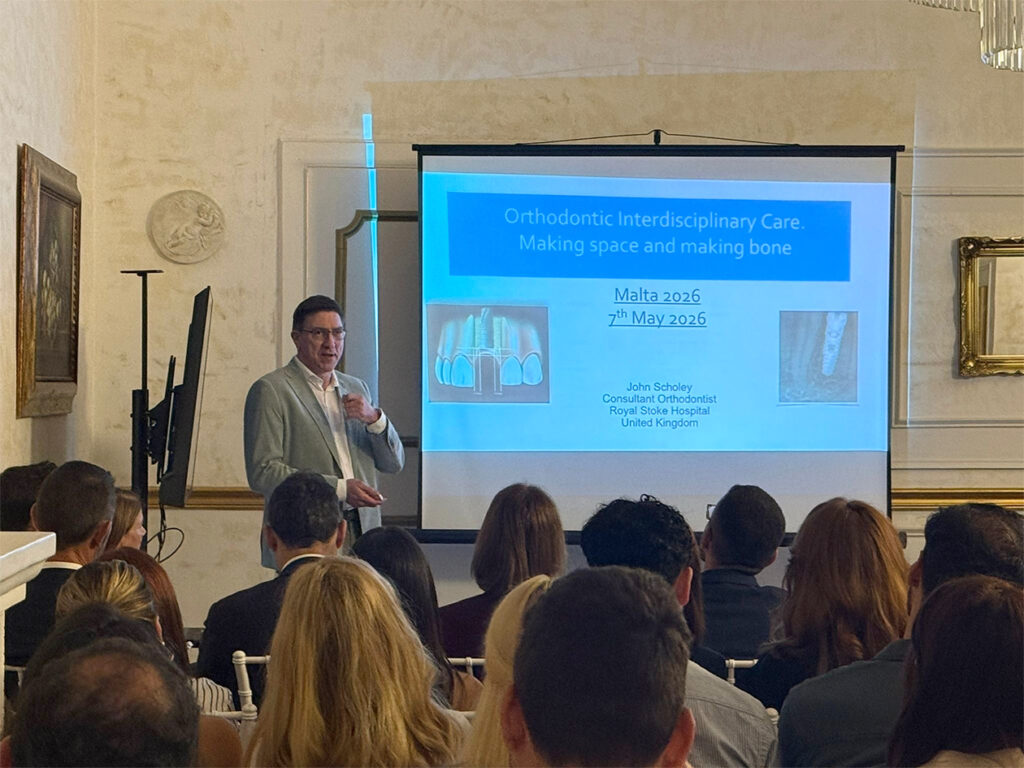
Particular emphasis was placed on the role of teamwork between orthodontists, prosthodontists and implant surgeons in achieving both functional and aesthetic results. It was noted that interdisciplinary cooperation has become increasingly essential in contemporary dental practice, especially as patient expectations and treatment possibilities continue to evolve.
The lecture was supported by industry sponsor AM Mangion Ltd. Organisers acknowledged the continuing importance of industry support in promoting professional development opportunities for Malta’s dental community.
Representatives of the MDSA described the evening as an important step in the organisation’s mission to encourage knowledge exchange and evidence-based clinical practice among dental specialists locally.
The association plans to host further educational events and international speakers in the future. Participants expressed strong interest in additional lectures focusing on the integration of orthodontics with restorative and implant dentistry, reflecting growing demand for comprehensive treatment planning approaches.
The evening concluded with an open discussion session, allowing attendees to engage directly with the speaker on clinical challenges, emerging technologies and the future direction of implant and orthodontic care.
A reception and drinks followed, providing guests with an opportunity to continue discussions and network with colleagues and fellow specialists.


