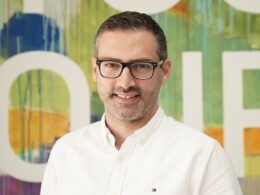
As Chief Executive of the Grand Harbour Regeneration Corporation, Gino Cauchi is leading one of Malta’s most complex and strategically significant regeneration programmes. In this video interview with Coryse Borg for the Business Picture Spotlight series, he outlines how the Grand Harbour Revival Plan is being structured to deliver long-term economic value, integrated urban development and a human-centred harbour district.
For Gino Cauchi, true regeneration is not defined by physical development alone, but by the quality of life it creates.
As CEO of the Grand Harbour Regeneration Corporation (GHRC), he is overseeing a multi-dimensional transformation programme that spans urban design, transport systems, public realm, innovation and economic development – all underpinned by a commitment to long-term cohesion rather than fragmented delivery.
At the heart of the Grand Harbour Regeneration Plan is a carefully structured approach to phasing. Rather than treating development as a single, monolithic project, Cauchi describes a model built on layered delivery, phases, and strategic sequencing.
“We are looking into each and every phase that we are proposing in a holistic way, but also fragmenting it as well,” Cauchi explains. “If you tend to try and address the whole phase as one goal, certainly in certain aspects you will leave something out and that will not bring the best results that we are aiming at.”
Regeneration beyond buildings
Central to this approach is a non-negotiable principle: public access and public use. Even in zones that will accommodate offices and residential development, Cauchi insists that the public realm must remain dominant.
“Each and every sub-phasing in phase one has got to be addressing public use,” he says. “This area has to be regenerated, revived and given back to the public.”
This philosophy reflects a broader shift in regeneration thinking – from enclosed developments to open, permeable urban districts.
He says that the Grand Harbour is not being reimagined as a series of isolated investment zones, but as a continuous living district, where economic activity, community life and cultural engagement coexist within the same spatial framework.
Interwoven spaces and transport
Residential areas, commercial functions and civic spaces are intentionally interwoven, ensuring that regeneration delivers social value alongside economic return.
Transport and mobility form another core pillar of the strategy. Cauchi frames accessibility not as an operational afterthought, but as a structural driver of success.
Connectivity between Marsa, Floriana, Valletta and the Three Cities is being embedded into the masterplan from the outset, with particular emphasis on multimodal transport solutions.
“Each and every sub-phasing in phase one has got to be addressing public use… This area has to be regenerated, revived and given back to the public.”
Gino Cauchi , Chief Executive of the Grand Harbour Regeneration Corporation
One of the most transformative concepts under active consideration is the reactivation of maritime transport within the harbour itself.
Cauchi identifies the sea as a strategic asset that has been historically underutilised in modern transport planning.
“We have an asset that up to now hasn’t been exploited that much, but it can give us solutions to other problems that we face on the roads each and every day,” he states. “We have to start thinking about using water means in the Grand Harbour for transportation.”
By reintroducing sea-based mobility between Cottonera, Valletta, Marsa and Floriana, the regeneration programme aims not only to improve connectivity but to reduce congestion and pressure on existing road infrastructure.
This integrated transport vision reflects a wider commitment to sustainable urban systems, where environmental performance and functional efficiency are aligned.
Partnerships and future-proofing
Private sector alignment is equally central to the long-term viability of the project. Cauchi draws a clear distinction between displacement and partnership, particularly in relation to existing maritime and commercial operators already active in the area.
The regeneration strategy, he stresses, is not about removing stakeholders, but about restructuring the environment in which they operate.
“We want to find solutions where to relocate so that you will continue with your activity even when the project is being implemented,” he explains. “We want you to keep on doing your business, your activity, because it’s important for the country’s economy and we don’t want to disrupt it.”
Beyond existing operators, the project is being positioned as a long-term investment platform for both local and international capital.
Following public consultation, the GHRC will move into structured pre-market engagement, inviting investors to assess opportunities phase by phase.
Early indicators, Cauchi notes, are encouraging, with growing interest from both domestic and foreign stakeholders.
Legacy planning and generational impact
From an innovation perspective, the regeneration strategy is deliberately future-facing.
Biodiversity, greening, sustainable agriculture, digital planning, smart infrastructure and environmental design are not treated as optional enhancements, but as foundational elements, he says.
“We’re giving it importance at this early stage because we know where we’re going,” Cauchi says. “Tomorrow they will be a must.”
This future-proofing ethos is reinforced through collaboration with internationally renowned design firm Chapman Taylor, whose global experience informs the project’s sustainability, innovation and urban integration frameworks.
Ultimately, Cauchi frames the Grand Harbour Regeneration Plan as a legacy project designed not for short-term visibility, but for generational impact, representing a governance model for how large-scale national regeneration can be structured – inclusive, investment-ready and future-focused.