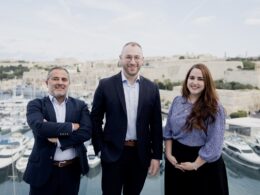
As Chairman of the Grand Harbour Regeneration Corporation (GHRC), Ryan Fava is overseeing one of Malta’s most ambitious urban transformation programmes. In this second video interview with Coryse Borg for The Business Picture Spotlight series, he outlines the long-term vision behind the Grand Harbour Revival Plan. He also speaks about how the regeneration of the harbour’s surrounding areas aims to preserve Malta’s heritage, while creating a vibrant, sustainable waterfront for future generations.
Through the ambitious Grand Harbour Revival Plan, Malta is seeking to transform this historic waterfront into a dynamic, mixed-use district that blends heritage, commerce, culture and community life.
Structured into four phases, the masterplan aims to create a high-standard urban environment that honours Malta’s maritime legacy while introducing modern spaces for living, working and leisure.
Reimagining the Marsa waterfront
The first phase focuses on the Marsa waterfront and the former power station site, an area that has historically been associated with heavy industry. According to Fava, the regeneration of this zone represents a symbolic turning point for Malta.
For decades, the site was dominated by industrial infrastructure linked to energy production and maritime operations.
The new vision seeks to replace that industrial footprint with a vibrant district designed around sustainability, quality architecture and public accessibility.
“We’re going for something which is giving much more identity to Malta; reshaping Malta,” Fava says. “We definitely want to make a ‘destination’ rather than a project.”
By combining residential developments, offices, hospitality venues, retail spaces and cultural attractions, the project hopes to extend the time visitors spend in the harbour area and encourage greater economic activity.
Currently, says Fava, many cruise passengers visiting Malta spend only a few hours exploring the capital before returning to their ships. He believes the regeneration plan can change that dynamic.
“Nowadays, one might ask what a tourist arriving on a cruise liner actually does during a day in Malta,” he says. “Usually, it’s a walk through perhaps St John’s Co-Cathedral, then down the lift, back onto the vessel – and that’s it.”
The redevelopment seeks to create a far richer visitor experience.
“We want tourists who contribute to Malta’s economy,” he continues. “This project will create a mix of commercial activity, residential spaces, food and beverage outlets, offices and shops. As a result, tourists visiting Malta will have more reasons, and more time, to spend in this area.”
Balancing tourism with a living maritime port
While tourism is a key consideration, Fava emphasises that the harbour will remain an active maritime hub. Maintaining the working character of the port is central to the project’s philosophy.
“We want to retain the stakeholders we have within the maritime sector and maintain the same activities,” he explains. “You have superyachts, maintenance operations, and vessels coming in for servicing. So it remains a living port. That is the beauty of our harbour.”
The plan therefore seeks to balance heritage, industry and urban life within a single integrated waterfront environment.
“We’re going for something which is giving much more identity to Malta; reshaping Malta… We definitely want to make a ‘destination’ rather than a project.”
Ryan Fava, Chairman of the Grand Harbour Regeneration Corporation
At present, the first phase of the project is undergoing public consultation, alongside a pre-market consultation process aimed at gauging investor interest both locally and internationally. According to Fava, the response so far has been encouraging.
Apart from private investment opportunities, the plan also includes infrastructure improvements and the introduction of new hospitality and commercial spaces.
Among the ideas being considered are hotel developments, office complexes and improved public amenities.
Such initiatives could allow some administrative functions currently housed in Valletta’s historic auberges to relocate to modern facilities, potentially freeing more heritage sites for cultural and tourism uses.
Residential development also forms part of the broader strategy. Areas such as Jesuit Hill are being considered for housing that overlooks the harbour, creating new living spaces integrated into the wider regeneration project.
Investment, infrastructure and new urban opportunities
Despite the scale of the project, Fava is keen to emphasise that the regeneration will be implemented gradually. Dividing the plan into four phases is intended to minimise disruption and ensure careful planning at every stage.
“This project is not something which is going to be done within three years,” he says. “We have split the project in four phases because we want to make it right.”
Equally important, he adds, is public participation in shaping the project’s direction.
“This is not something which belongs to me,” Fava stresses. “It is something which belongs to the nation, and everyone has to benefit from this project.”
A long-term national vision
For Fava, the Grand Harbour Revival Plan is about preserving Malta’s strategic and cultural identity while preparing the island for future generations.
“This is not something which belongs to me. It is something which belongs to the nation, and everyone has to benefit from this project.”
Ryan Fava, Chairman of the Grand Harbour Regeneration Corporation
By combining heritage-sensitive design with contemporary development, the regeneration aims to ensure that the harbour continues to evolve while retaining its historic character.
“We want to preserve the history and heritage that we have,” Fava says. “Even through the design, we want the project to reflect a distinctly Maltese identity. Our aim is to leave something that is fruitful, beneficial and truly fitting for our islands,” he concludes.