A large board. Undervalued shares. Cash quietly accumulating in the bank. On paper, Plaza Centres plc – the Sliema shopping and office complex – looked solid but sleepy.
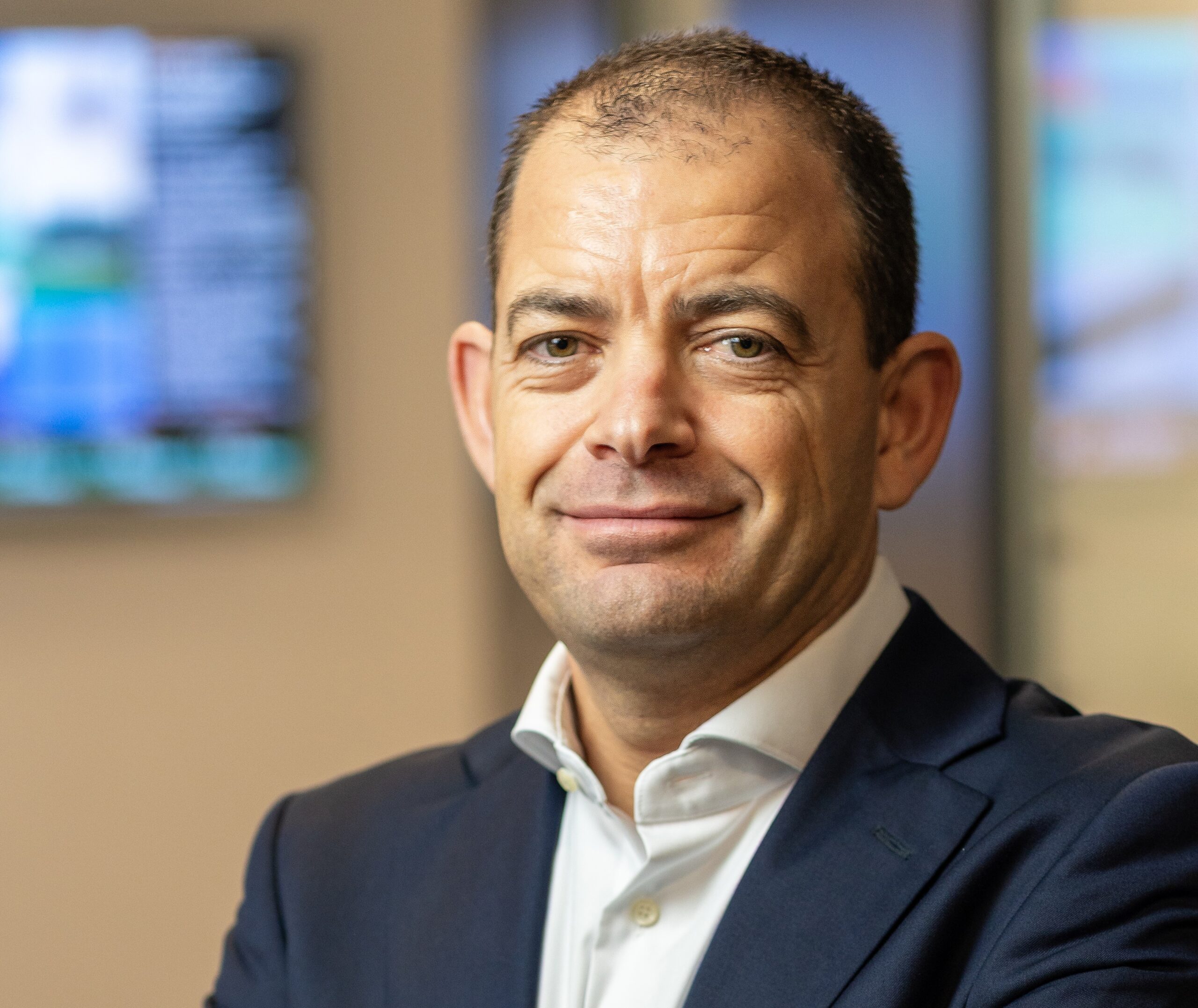
For Jordi Goetstouwers Odena, founder and president of Virgata Group, that combination was exactly the point.
“We look for good real estate that is priced well below what we believe it’s actually worth, and then we roll up our sleeves,” he says. Plaza, in one of Malta’s busiest commercial spots and throwing off steady rental income and dividends for years, was trading at more than 50 percent below net asset value.
“That kind of gap between reality and market price is exactly what gets us interested. We even think that valuing the building at only 10 times its rental income is very conservative.”
Virgata, a private investment firm that owns Rotterdam’s Van Nellefabriek – a UNESCO World Heritage site it acquired in 2018 with about 40 percent vacancy – now holds 37.6 percent of Plaza.
READ: Virgata HQ increases stake in Plaza Centres to just over 37.6%
Goetstouwers has spent over two decades focused on real estate, including on the board of Officefirst AG in Germany, a €3.25 billion portfolio roughly a hundred times Plaza’s size.
“Plaza fits the mould perfectly: a solid asset with great potential that we can help unlock.”
From 65c to a four-year high
In the first half of 2025, Virgata quietly picked up a substantial block of Plaza shares in smaller trades at an average price just above 65c, while Plaza was reporting net asset value of €1.09 per share.
“We were buying at a 40 per cent discount to what the assets were actually worth,” Goetstouwers notes.
On 18 December, Virgata bought Mapfre’s 31 percent stake at 94c per share in a single block trade – 38 percent above the previous market price. Plaza’s share price promptly jumped to around 90c, a four-year high.
“The post COVID undervaluation was fundamentally a liquidity problem,” he adds. Not enough buyers. Small shareholders who needed cash “were forced to take whatever was on offer.”
Fixing that – alongside tightening governance – is Virgata’s central argument going into the EGM on 25 March, 2026.
Slimmer board, sharper focus
Two of the three resolutions at the EGM come from Virgata: a smaller board and a share buyback. “Simply put: these are the two highest impact things we can do for shareholders right now,” Goetstouwers says.
He is careful to give credit where it’s due – directors and management steered Plaza through COVID, and “they deserve a lot of credit for that.” But five years on, the company needs a board geared for the next chapter, not the last crisis.
The proposal is to reduce the board from seven directors to five. For a company that owns one building, he feels, seven is disproportionate.
“In a five-member board there’s no room to be a passenger. Every director has to be engaged, every voice counts, and decisions happen faster.”
The move also has a direct financial effect. Cutting two seats saves an estimated €20,000-€30,000 a year in directors’ fees.
With Plaza’s annual dividend around €600,000, that translates into a three to five percent dividend increase “delivered immediately, with zero operational risk”.
Shareholder rights remain in view. Any time shareholders together representing 14 percent of the equity join forces, they can directly appoint a director, just as Virgata appointed Goetstouwers and Gregory Gatt on the strength of their stake above 28 percent.
If four directly appointed directors were ever reached, the board would automatically expand back to seven. “So this isn’t some irreversible power grab,” he assures, “it responds directly to actual shareholder participation.”
Buybacks: jars of euro coins at 90c
If the board change is about structure, the buyback is about pure maths.
Plaza would mandate brokers to keep a standing bid in the market on its behalf, buying back shares at prices below net asset value up to a defined cap.
“As long as the buyback price per share is below net asset value – the true value of the shares – this is like buying a jar full of one euro coins for ninety cents per coin,” Goetstouwers explains.
At the top of the proposed range, 95c, he calculates that each share bought back creates 14c of value for remaining shareholders.
At the maximum envisaged size of 2.4 million shares, that adds up to €336,000 of value and roughly a 10 percent increase in dividend per share, compared with leaving the money sitting in low yielding liquid investments.
“In a five-member board there’s no room to be a passenger. Every director has to be engaged, every voice counts, and decisions happen faster.”
Jordi Goetstouwers Odena
Had Plaza used some of its cash in early 2025 to buy back the same shares Virgata acquired at around 65c, he notes, that would have created over €400,000 of value for shareholders – a significant sum for a company with after tax profit of €1.12 million.
The second leg is liquidity. With a standing bid in place, small shareholders who want to sell “are no longer stuck accepting an opportunistic bid at 50 percent below NAV because there’s literally nobody else on the other side”.
The third leg is affordability. Plaza holds liquid investments roughly matching its €4.9 million bond maturing in September 2026 and has retained earnings of over €5 million.
In Goetstouwers’ view, the company can refinance that bond “on very sustainable terms at a cost that should be lower than the value added by the buyback,” without touching its operating capacity.
Bread and butter real estate work
At asset level, the focus is less glamorous: getting the tenant mix right, keeping lease terms competitive, and making the physical space attractive.
The closure of Esports Avenue – in which Plaza held 51 per cent – is taken in stride.
“It is important to continuously explore new ideas, and we think the company did the right thing giving this a go,” he explains, pointing to the gym and food court as examples of what is working.
Longer term, he wants Plaza to explore options with architects and a refreshed board – extension, reconfiguration, the rooftop. “These are all ideas to be worked through.”
On the wider retail picture, he is realistic but upbeat. In Malta retail lives or dies by location. The island is, as he puts it, “a small, densely populated island with strong tourism and a growing population.”
Plaza’s position in the heart of Sliema – effectively with two ground floors on different sides – gives it structural advantages. He plans to work with tenants to host brands that aren’t duplicated on every corner.
A long-term anchor, not a quick trade
Goetstouwers is keen to stress that Virgata’s 37.6 per cent stake is not a short-term punt. Virgata’s head office is in Birkirkara, in a building it owns. He lived in Malta full time for over a decade, his three children were born here, and he still spends about a third of his time on the island.
“We are a family company investing with a time horizon measured in generations, not years,” he says. “You do not build a 37 plus percent stake in a listed company, methodically, over time, spending millions of euros, if you are planning to flip it. For minority shareholders, having an anchor investor with this much skin in the game should be reassuring. Our interests are completely aligned: every euro of value we create benefits all shareholders proportionally.”
His message ahead of the EGM is deliberately simple: “Shareholders, we are on your side.”
In three to five years, he wants Plaza trading near its NAV, paying a growing dividend, actively managing its assets – “a bigger and growing, well governed, efficiently capitalised listed property company.”
The gap between that and today is the opportunity. “We are committed to closing it – step by step – starting with a vote in favour of our resolutions on 25 March.”
Whether shareholders agree with that plan will become clear at the EGM – but the days of Plaza drifting quietly along appear to be over.