Malta Chamber and Bank of Valletta host ‘Malta’s Economic Compass 2026’
Bank of Valletta and the Malta Chamber hosted a conference titled ‘Malta’s Economic Compass 2026’, bringing together key stakeholders in a dynamic discussion about Malta’s economic landscape in a world that is more complex and unpredictable than ever.
The conference highlighted that global economic environment will remain challenging, and relying on a “business as usual” mindset is no longer enough. Companies need to explore alternative futures, identify emerging opportunities and correct imbalances before they become systemic risks.
In his opening speech, the Malta Chamber president William Spiteri Bailey remarked that from the Malta Chamber’s perspective, three priorities are clear.
“Malta’s future growth must be productivity-driven, focused on skills, technology, strong governance, and regulation that delivers long-term value rather than short-term gains. This requires deliberate choices about which sectors to support and how,” he said, adding that Malta also needs an honest, coordinated approach to demographics and labour.
“Foreign talent is essential, but must be matched with proper planning for integration, housing, infrastructure and social cohesion. Finally, key sectors such as tourism and property must move beyond ‘business as usual’ towards higher-value, better-planned, ESG-driven models that sustain competitiveness and share benefits more fairly,” he said.
Marthese Portelli, CEO of the Malta Chamber, said Malta’s low unemployment rate, while positive, also presents challenges for businesses seeking to recruit.
“Keeping this in mind, businesses should focus on business process review and reengineering to increase efficiency and do away with superfluous processes which can be transformed through investment in technology,” she said.
“We need to invest now”
With respect to innovation, Portelli noted that despite progress, the European Innovation Scoreboard lists Malta as a moderate innovator, with structural gaps such as limited venture capital and a low number of doctoral graduates hindering a stronger innovation ecosystem.
“Economic growth must also be assessed beyond GDP figures. Growth must be well planned, sector-focused and balanced with well-being,” she continued.
“Tourism illustrates this clearly: the Malta Chamber warned of an oversupply of accommodation as early as 2021, and the impact is evident today. As government incentivises key sectors, it must remain agile and forward-looking. Above all, quality must be clearly defined and holistic, delivering meaningful experiences that benefit the wider community while preserving Malta’s culture, heritage and identity.”
BOV chief executive officer Kenneth Farrugia, who also participated in the panel discussion, highlighted the important role Malta’s financial sector can play in supporting long-term economic growth through innovation and investment in technology. He said that companies must continue to embrace digital transformation and invest in technology, particularly artificial intelligence.
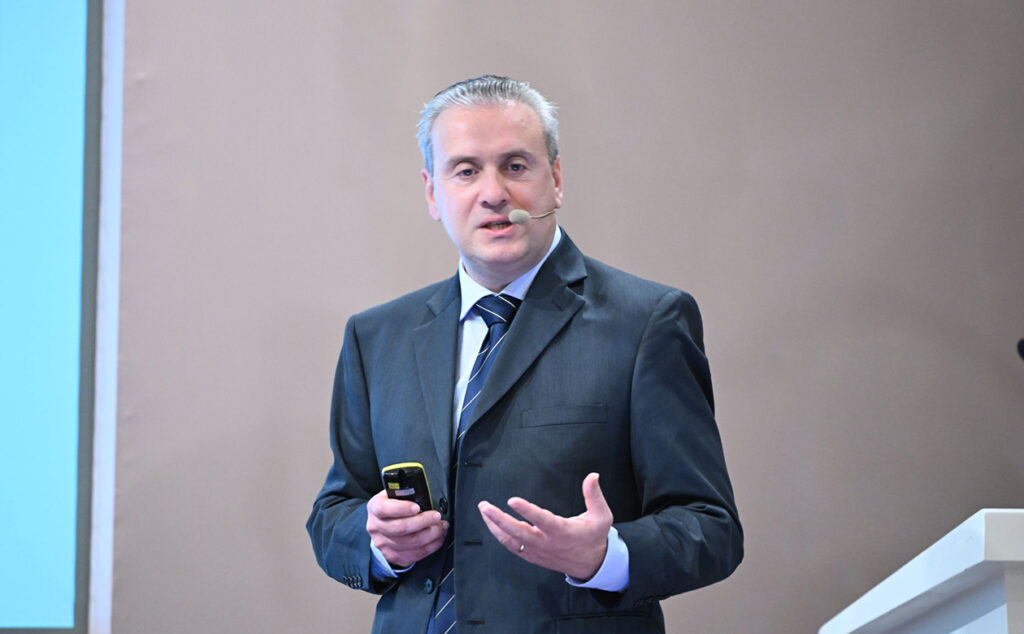
“Companies are not always seeing the long-term benefits of the investments they are making today. We need to invest now to deliver stronger profitability over the medium to long term,” Farrugia said. “It is all about legacy, we should be driven by the legacy we want to leave behind for future generations.”
Turning to pensions, he stressed the importance of being smart with money and long-term financial planning.
Malcolm Bray, head of BOV’s Economics Unit, delivered the keynote speech, offering an in-depth assessment of the increasingly unpredictable global landscape. He noted that rapid shifts across economic, political, technological and environmental spheres continue to shape worldwide developments.
Despite heightened geopolitical tensions, Bray said that Malta’s economic outlook remains favourable, supported by solid economic growth, low unemployment, inflation converging towards the ECB’s target and a public debt ratio that remains within established thresholds.
He also highlighted how Malta’s export performance has shown remarkable resilience despite the introduction of US tariffs, attributing this strength to the diversification of Malta’s economic sectors.
In his presentation, Bray spoke about Malta’s demographic trends, tourism, the property market and public finances. He noted the tourism sector’s record arrivals, while underscoring the need to improve real per capita spending.
On the property market, he outlined factors behind rising residential property prices and observed that household wealth has expanded over time, but remains heavily concentrated in property and bank deposits, highlighting the scope for better asset optimisation.
Turning to public finances, he urged a deeper look beyond headline deficit figure to examine expenditure dynamics in line with new EU economic governance framework and identified areas such as municipal waste management and emissions where Malta continues to lag behind EU averages.
The panel discussion titled ‘Balancing Growth and Resilience Amid Global Shifts’ focused on Malta’s current economic situation within the context of ongoing uncertainty due to geopolitical tensions.
Moderated by Rachel Bondi Attard, head of media and communications strategy at the Malta Chamber, the discussion brought together BOV CEO Farrugia, Malta Chamber CEO Portelli, Reuben Debono, Maypole Group CEO, and Bernard Attard, clients and markets leader, PwC Malta.
They identified priority areas where structural change and transformation are required and examined the key policies that should be prioritised to maintain progress and prevent stagnation.